
Omaha Hi-Lo strategy: why scooping is the only goal that matters
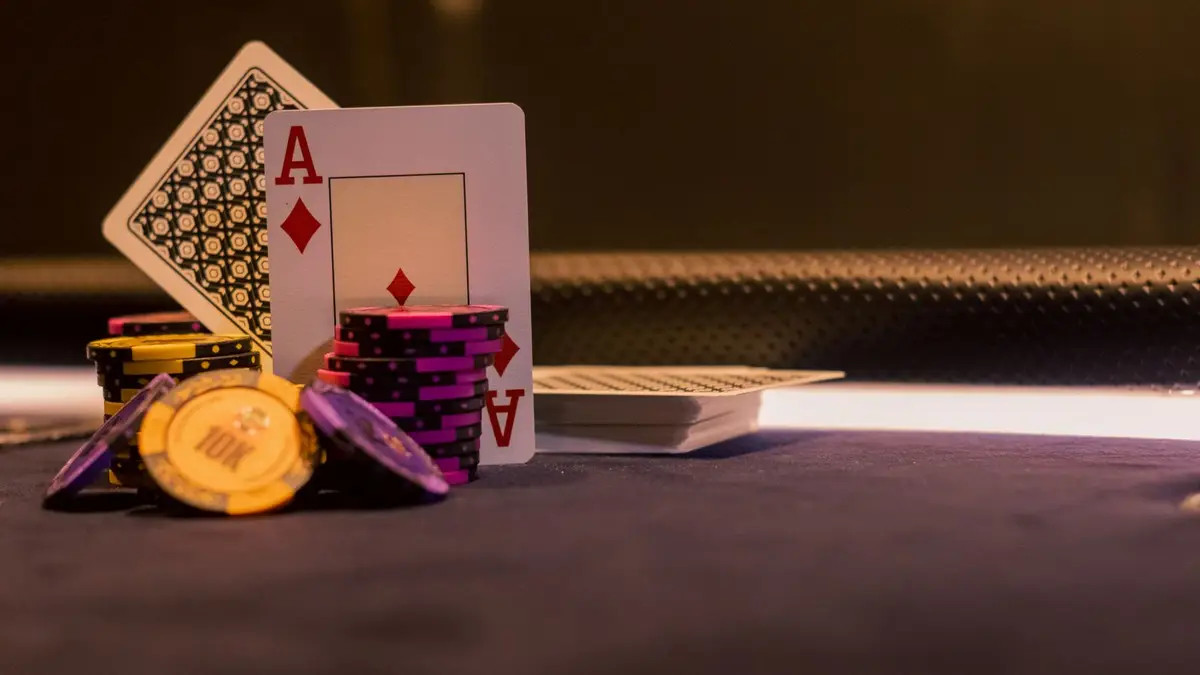
Most players arriving at Omaha Hi-Lo from Hold’em make the same mistake for the same reason: they treat the low half of the pot as a bonus. It isn’t a bonus. It’s the thing that decides whether a hand is worth playing at all.
The rules, briefly
Each player is dealt four hole cards and must use exactly two of them, plus exactly three from the board, for each hand they make. You may use a different two for the high hand than for the low.
The pot splits between the best high hand and the best qualifying low. A low needs five unpaired cards of eight or lower — that’s the “eight or better” qualifier. Straights and flushes don’t count against a low, which is why A-2-3-4-5 is both the best possible low and a strong high.
If no low qualifies, the high hand takes everything.
Why scooping is everything
Winning half a pot you paid full price to contest is close to break-even. Winning the whole pot is where the profit lives.
That single fact reorders the hand rankings. A hand that can only ever win one half — say K-K-Q-J with no low potential — has to win outright every time to be worth playing. A hand that can win both ends can turn one good flop into the entire pot.
This is why A-2 with a suited ace and a pair or connected high cards is the premium starting shape, and why four low cards with no high potential is a trap that looks playable.
Counterfeiting: the trap Hold’em doesn’t teach
You hold A-2. The board comes 3-4-9. You have the current nut low.
Then a deuce falls on the turn. Your 2 is now duplicated on the board, and your low is no longer A-2-3-4-9 — you need to use different cards, and suddenly a player holding A-5 has you beaten for low.
That’s counterfeiting, and it is the single most expensive surprise for players new to the game. It’s also why A-2-3 is meaningfully stronger than A-2: the third low card is insurance against exactly this.
Before committing to a low draw, ask what happens if one of your low cards pairs the board.
Quarters, and how to avoid them
When two players hold the same nut low, they split the low half — a quarter of the pot each. Put money in a pot for a quarter and you are usually setting money on fire, because the player scooping the high half is taking three quarters of it.
A-2 is the most commonly dealt low draw in the game, which means the nut low is frequently shared. The way out is to have something else going on: a high hand, a nut flush draw, a wheel that also plays as a straight. A bare A-2 in a multiway pot is a strong hand and a poor investment at the same time.
Position and the pot-limit structure
Omaha Hi-Lo is usually spread pot-limit, which caps the pressure any single bet can apply and makes drawing hands more playable than they would be in no-limit.
That structure rewards position heavily. Seeing how many opponents commit before you decide tells you whether the low is likely to be split three ways, and whether your marginal high has any chance of scooping.
Starting hands, ranked by what they can win
- Scoop candidates. A-2-3-4 double-suited; A-A-2-3; A-2 with a suited ace and a paired or connected high card. These win both ends.
- High-only. A-A-K-K double-suited, K-K-Q-J. Playable, but they need to take the whole pot on a board with no qualifying low.
- Low-only. A-2-x-x with disconnected high cards. Play cautiously and rarely for stacks.
- Fold. Four middling cards, 6-7-8-9 types. They make second-best highs and non-qualifying lows.
The short version
- Play hands that can scoop; fold hands that can only chop.
- A-2-3 beats A-2 because counterfeiting is real and common.
- A shared nut low is a quarter of the pot, not half.
- No qualifying low means the high hand takes it all — count the board before you count your equity.
Omaha Hi-Lo punishes autopilot more than almost any other variant. Every hand asks the same question twice — can I win the high, can I win the low — and the profitable answer is usually both or neither.
Your next big win starts here
Join the action and unlock exclusive promotions, weekly rakeback, and jackpot rewards from your very first hand.